Friday, November 11, 2022

A new word to me: prolepsis

From Wikipedia, about James Baldwin's Giovanni's Room:

After a year in Paris, penniless, he calls Jacques, an older homosexual acquaintance, to meet him for supper so he can ask for money. (In a prolepsis, Jacques and David meet again and discuss Giovanni's fall.) 

A prolepsis is a scene that temporarily takes the narrative forward in time from the current point of the story.


Tuesday, October 25, 2022

Hemingway's Old Man and the Sea

Was just in a book club discussion about Ernest Hemingway's The Old Man and the Sea, so jotting a few notes for my own reference to come back to.

The Old Man and the Sea is a novella written by the American author Ernest Hemingway in 1951 in Cayo Blanco (Cuba), and published in 1952. It was the last major work of fiction written by Hemingway that was published during his lifetime. One of his most famous works, it tells the story of Santiago, an aging Cuban fisherman who struggles with a giant marlin far out in the Gulf Stream off the coast of Cuba.

Written in 1951, The Old Man and the Sea is Hemingway's final work published during his lifetime. 

In 1953, The Old Man and the Sea was awarded the Pulitzer Prize for Fiction, and it was cited by the Nobel Committee as contributing to their awarding of the Nobel Prize in Literature to Hemingway in 1954.

In 1954, Hemingway wanted to donate his Nobel Prize in Literature gold medal to the Cuban people. To avoid giving it to the Batista government, he donated it to the Catholic Church for display at the sanctuary at El Cobre, a small town outside Santiago de Cuba where the Marian image of Our Lady of Charity is located. 

I listened to the Audible version (narrated by Donald Sutherland!). I have a lot more Hemingway to read before I feel like I really know this author (why have I not read him more until now?).

Hemingway's works

  • (1925) In Our Time
  • (1926) The Sun Also Rises
  • (1926) Torrents of Spring
  • (1929) A Farewell to Arms - read, great
  • (1937) To Have and Have Not
  • (1940) For Whom the Bell Tolls
  • (1950) Across the River and into the Trees
  • (1952) The Old Man and the Sea - read, loved it
  • (1970*) Islands in the Stream
  • (1986*) The Garden of Eden
* = posthumous publication


Update: returning periodically to update what I have read

Monday, August 29, 2022

In Search of Lost Time

I have stumbled into reading Marcel Proust's In Search of Lost Time and am now part of a book club that will continue for 2-3 years. 

In Search of Lost Time, also known as, Remembrance of Things Past, is a novel in seven volumes by French author Marcel Proust. The series follows the narrator's recollections of childhood and experiences into adulthood in the late 19th-century and early 20th-century high-society France, while reflecting on the loss of time and lack of meaning in the world. I listened to the Audible version, with each book being about 15 hours (!). 

A few interesting things I have found (and I'll just keep updating this post for myself as time goes by).


Paintings as a companion

Paintings in Proust: A Visual Companion to In Search of Lost Time by Eric Karpeles 

With some 200 paintings beautifully reproduced in full color and texts drawn from the Moncrieff/Kilmartin/Enright translation, as well as concise commentaries on the evolving narrative, this book is an essential addition to the libraries of Proustians everywhere. You can buy it on Amazon here (which I will do!). 


Graphic novel version

In what renowned translator Arthur Goldhammer says might be "likened to a piano reduction of an orchestral score," the French illustrator Stéphane Heuet re-presents Proust in graphic form for anyone who has always dreamed of reading him but was put off by the sheer magnitude of the undertaking. This graphic adaptation reveals the fundamental architecture of Proust’s work while displaying a remarkable fidelity to his language as well as the novel's themes of time, art, and the elusiveness of memory.

In Search of Lost Time: Swann’s Way by Stéphane Heuet/Marcel Proust – review of the graphic novel version

It can be purchased here on Amazon.


Laocoön and His Sons

This sculpture, Laocoön and His Sons, was mentioned in a book chat I was in today about Marcel Proust's Swan's Way. One of the participants brought it up as a metaphor for all the tangled serpents of time that he is weaving together. 

The statue of Laocoön and His Sons has been one of the most famous ancient sculptures ever since it was excavated in Rome in 1506. It is on display in the Museo Pio-Clementino, a part of the Vatican Museums.

It is very likely the same statue that was praised in the highest terms by the main Roman writer on art, Pliny the Elder. Pliny attributes the work, then in the palace of Emperor Titus, to three Greek sculptors from the island of Rhodes: Agesander, Athenodoros and Polydorus, but does not give a date or patron. 

In style it is considered "one of the finest examples of the Hellenistic baroque" and certainly in the Greek tradition, but it is not known whether it is an original work or a copy of an earlier sculpture, probably in bronze, or made for a Greek or Roman commission. It was probably commissioned for the home of a wealthy Roman, possibly of the Imperial family. 

The figures are near life-size and the group is a little over 2 m (6 ft 7 in) in height, showing the Trojan priest Laocoön and his sons Antiphantes and Thymbraeus being attacked by sea serpents. The group has been called "the prototypical icon of human agony" in Western art. The suffering is shown through the contorted expressions of the faces, which are matched by the struggling bodies, especially that of Laocoön himself, with every part of his body straining.

Although mostly in excellent condition for an excavated sculpture, the group is missing several parts, and analysis suggests that it was remodelled in ancient times and has undergone a number of restorations since it was excavated. 

The story of Laocoön, a Trojan priest, came from the Greek Epic Cycle on the Trojan Wars, though it is not mentioned by Homer. It had been the subject of a tragedy, now lost, by Sophocles and was mentioned by other Greek writers, though the events around the attack by the serpents vary considerably. 

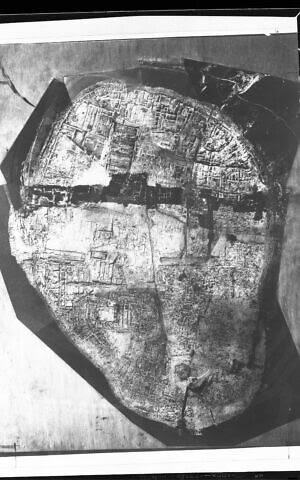
This map shows the findspot of the sculpture
– near the R in "SERVIUS", east of the Sette Sale

Sunday, August 21, 2022

Upon reading Animal Farm

I had a chance to talk about Animal Farm by George Orwell in a book club today (it's great, there are participants from around the world). This is another chapter in my goal to 'read the classics'.

One of the most interesting aspects was who the characters in Animal Farm represent. Loved the book but I wasn't aware of this backstory, so I am posting this for my own reference - and food for thought as I learn more history....

Who the characters in Animal Farm represent


Pigs


Old Major
– An aged prize Middle White boar provides the inspiration that fuels the rebellion. He is also called Willingdon Beauty when showing. He is an allegorical combination of Karl Marx, one of the creators of communism, and Vladimir Lenin, the communist leader of the Russian Revolution and the early Soviet nation, in that he draws up the principles of the revolution. His skull being put on revered public display recalls Lenin, whose embalmed body was left in indefinite repose. By the end of the book, the skull is reburied.


Napoleon
– "A large, rather fierce-looking Berkshire boar, the only Berkshire on the farm, not much of a talker, but with a reputation for getting his own way". An allegory of Joseph Stalin, Napoleon is the leader of Animal Farm.

Snowball – Napoleon's rival and original head of the farm after Jones's overthrow. His life parallels that of Leon Trotsky, although there is no reference to Snowball having been murdered (as Trotsky was); he may also combine some elements from Lenin.

Squealer – A small, white, fat porker who serves as Napoleon's second-in-command and minister of propaganda, is a collective portrait of the Soviet nomenklatura and journalists, such as of the national daily Pravda (The Truth), able to justify every twist and turn in Stalin's policy.

Minimus – A poetic pig who writes the second and third national anthems of Animal Farm after the singing of "Beasts of England" is banned. Literary theorist John Rodden compares him to the poet Vladimir Mayakovsky, although Mayakovsky neither wrote anthems nor praised Stalin in his poems.

The piglets – Hinted to be the children of Napoleon and are the first generation of animals subjugated to his idea of animal inequality.

The young pigs – Four pigs who complain about Napoleon's takeover of the farm but are quickly silenced and later executed, the first animals killed in Napoleon's farm purge. Probably based on the Great Purge of Grigory Zinoviev, Lev Kamenev, Nikolai Bukharin, and Alexei Rykov.

Pinkeye – A minor pig who is mentioned only once; he is the taste tester that samples Napoleon's food to make sure it is not poisoned, in response to rumours about an assassination attempt on Napoleon.

Humans

Mr. Jones – A heavy drinker who is the original owner of Manor Farm, a farm in disrepair with farmhands who often loaf on the job. He is an allegory of Russian Tsar Nicholas II, who abdicated following the February Revolution of 1917 and was murdered, along with the rest of his family, by the Bolsheviks on 17 July 1918. The animals revolt after Jones goes on a drinking binge, returns hungover the following day and neglects them completely. Jones is married, but his wife plays no active role in the book. She seems to live with her husband's drunkenness, going to bed while he stays up drinking until late into the night. In her only other appearance, she hastily throws a few things into a travel bag and flees when she sees that the animals are revolting. Towards the end of the book, Napoleon's "favourite sow" wears her old Sunday dress.

Mr. Frederick – The tough owner of Pinchfield Farm, a small but well-kept neighbouring farm, who briefly enters into an alliance with Napoleon. Animal Farm shares land boundaries with Pinchfield on one side and Foxwood on another, making Animal Farm a "buffer zone" between the two bickering farmers. The animals of Animal Farm are terrified of Frederick, as rumours abound of him abusing his animals and entertaining himself with cockfighting. Napoleon enters into an alliance with Frederick in order to sell surplus timber that Pilkington also sought, but is enraged to learn Frederick paid him in counterfeit money. Shortly after the swindling, Frederick and his men invade Animal Farm, killing many animals and destroying the windmill. The brief alliance and subsequent invasion may allude to the Molotov–Ribbentrop Pact and Operation Barbarossa.

Mr. Pilkington – The easy-going but crafty and well-to-do owner of Foxwood Farm, a large neighbouring farm overgrown with weeds. Pilkington is wealthier than Frederick and owns more land, but his farm is in need of care as opposed to Frederick's smaller but more efficiently run farm. Although on bad terms with Frederick, Pilkington is also concerned about the animal revolution that deposed Jones and worried that this could also happen to him.

Mr. Whymper – A man hired by Napoleon to act as the liaison between Animal Farm and human society. At first, he is used to acquire necessities that cannot be produced on the farm, such as dog biscuits and paraffin wax, but later he procures luxuries like alcohol for the pigs.

Equines (horses)

Boxer – A loyal, kind, dedicated, extremely strong, hard-working, and respectable cart-horse, although quite naive and gullible. Boxer does a large share of the physical labour on the farm. He is shown to hold the belief that "Napoleon is always right". At one point, he had challenged Squealer's statement that Snowball was always against the welfare of the farm, earning him an attack from Napoleon's dogs. But Boxer's immense strength repels the attack, worrying the pigs that their authority can be challenged. Boxer has been compared to Alexey Stakhanov, a diligent and enthusiastic role model of the Stakhanovite movement. He has been described as "faithful and strong"; he believes any problem can be solved if he works harder. When Boxer is injured, Napoleon sells him to a local knacker to buy himself whisky, and Squealer gives a moving account, falsifying Boxer's death.


Mollie
– A self-centred, self-indulgent, and vain young white mare who quickly leaves for another farm after the revolution, in a manner similar to those who left Russia after the fall of the Tsar. She is only once mentioned again.

Clover – A gentle, caring mare, who shows concern especially for Boxer, who often pushes himself too hard. Clover can read all the letters of the alphabet, but cannot "put words together".

Benjamin – A donkey, one of the oldest, wisest animals on the farm, and one of the few who can read properly. He is sceptical, temperamental and cynical: his most frequent remark is, "Life will go on as it has always gone on – that is, badly". Academic Morris Dickstein has suggested there is "a touch of Orwell himself in this creature's timeless scepticism" and indeed, friends called Orwell "Donkey George", "after his grumbling donkey Benjamin, in Animal Farm". Benjamin manages to evade the purges and survive despite the threat he potentially poses given his knowledge, his age, and his equivocal, albeit apolitical, positions.

Other animals


Muriel
– A goat who is another of the oldest, wisest animals on the farm and friends with all of the animals on the farm. Similar to Benjamin, Muriel is one of the few animals on the farm who is not a pig but can read. She survives, as does Benjamin, by eschewing politics.

The puppies – Offspring of Jessie and Bluebell, the puppies were taken away at birth by Napoleon and raised by him to serve as his powerful security force.

Moses – The Raven, "Mr. Jones's especial pet, was a spy and a tale-bearer, but he was also a clever talker". Initially following Mrs. Jones into exile, he reappears several years later and resumes his role of talking but not working. He regales Animal Farm's denizens with tales of a wondrous place beyond the clouds called "Sugarcandy Mountain, that happy country where we poor animals shall rest forever from our labours!" Orwell portrays established religion as "the black raven of priestcraft – promising pie in the sky when you die, and faithfully serving whoever happens to be in power". His preaching to the animals heartens them, and Napoleon allows Moses to reside at the farm "with an allowance of a gill of beer daily", akin to how Stalin brought back the Russian Orthodox Church during the Second World War.


The sheep
– They are not given individual names or personalities. They show limited understanding of Animalism and the political atmosphere of the farm, yet nonetheless they are the voice of blind conformity as they bleat their support of Napoleon's ideals with jingles during his speeches and meetings with Snowball. Their constant bleating of "four legs good, two legs bad" was used as a device to drown out any opposition or alternative views from Snowball, much as Stalin used hysterical crowds to drown out Trotsky. Towards the end of the book, Squealer (the propagandist) trains the sheep to alter their slogan to "four legs good, two legs better", which they dutifully do.

The hens – Also unnamed, the hens are promised at the start of the revolution that they will get to keep their eggs, which are stolen from them under Mr. Jones. However, their eggs are soon taken from them under the premise of buying goods from outside Animal Farm. The hens are among the first to rebel, albeit unsuccessfully, against Napoleon. They are brutally suppressed.


The cows
– Also unnamed, the cows are enticed into the revolution by promises that their milk will not be stolen but can be used to raise their own calves. Their milk is then stolen by the pigs, who learn to milk them. The milk is stirred into the pigs' mash every day, while the other animals are denied such luxuries.

The cat – Unnamed and never seen to carry out any work, the cat is absent for long periods and is forgiven because her excuses are so convincing and she "purred so affectionately that it was impossible not to believe in her good intentions". She has no interest in the politics of the farm, and the only time she is recorded as having participated in an election, she is found to have actually "voted on both sides". 

The ducks – Also unnamed.

The roosters – One arranges to wake Boxer early, and a black one acts as a trumpeter for Napoleon.

The geese – Also unnamed. One gander commits suicide by eating nightshade berries.


The above is from Wikipedia


Monday, August 15, 2022

When Books Went to War

 This is one of the most fascinating reads of mine in the last year or so:

When Books Went to War by by Molly Guptill Manning 

A couple of quotes:

When America entered World War II in 1941, we faced an enemy that had banned and burned over 100 million books and caused fearful citizens to hide or destroy many more. Outraged librarians launched a campaign to send free books to American troops and gathered 20 million hardcover donations. In 1943, the War Department and the publishing industry stepped in with an extraordinary program: 120 million small, lightweight paperbacks, for troops to carry in their pockets and their rucksacks, in every theater of war. Comprising 1,200 different titles of every imaginable type, these paperbacks were beloved by the troops and are still fondly remembered today. 

Created in a time of shortages, these books were marvels of design. They came in two sizes: one to fit in a uniform’s shirt pocket, the other to fit in the pants. They were stapled, not glued, because of the lack of rubber and the fact that tropical insects found glue edible. And they were printed horizontally, not vertically, so that each page was shaped like a postcard and contained two narrow columns of print. This layout was deemed easier to read and less likely to waste precious paper.

Definitely worth a read, as perhaps wouldn't have had paperbacks today, if it hadn't been for this endeavor.

I listened the Audible audiobook, and it was well narrated.

A few resources:

When Books Went to War | Molly Guptill Manning (mollymanning.com) - the author's website

'When Books Went to War’ by Molly Guptill Manning - The New York Times (nytimes.com)

Molly Guptill Manning on the pocket-sized books soldiers took to war : NPR's Book of the Day : NPR


Tuesday, August 09, 2022

Bob Dylan: Blood on the Tracks

 Album or podcast - what is it?

I have been participating in book clubs lately and I found one on Bob Dylan and something called Blood on the Tracks. I didn't remember it as an album (silly me!), and when I searched for a book, I found a multi-episode podcast of the same name, so I listened to that in preparation (veeerrry interesting stuff!). 

Tonight I showed up for the meeting and the topic was the album, not the podcast, lol. So... I have now downloaded the album to listen to night. 

Blood on the Tracks - The Podcast

BLOOD ON THE TRACKS is part true crime, part historical fiction, part spoken word lo-fi beat noir brought to you by Jake Brennan, host of the the award-winning music and true crime podcast DISGRACELAND.


Blood on the Tracks Season 3: A Bob Dylan Story 

In 1966, Bob Dylan crashed his Triumph motorcycle on a road in upstate New York. And then he disappeared. For ten days, as Dylan recovered privately in the house of a local doctor, no one knew where he was. When he resurfaced, he was transformed. He looked different. He sounded different. What exactly happened to Bob Dylan during those ten days? Was he simply recovering from injuries sustained during the accident? Detoxing from heavy drug use? Was he suffering a mental breakdown? Or had the Bob Dylan you thought you knew...died?

Listen to the podcast

Blood on the Tracks - The Album


Blood on the Tracks is the fifteenth studio album by American singer-songwriter Bob Dylan, released on January 20, 1975, by Columbia Records. The album marked Dylan's return to Columbia Records after a two-album stint with Asylum Records. Dylan began recording the album in New York City in September 1974. In December, shortly before Columbia was due to release the album, Dylan abruptly re-recorded much of the material in a studio in Minneapolis. The final album contains five tracks recorded in New York and five from Minneapolis.

Listen to the album (from bobdylan.com)

Other notables

... and a few other things I found to follow up on....

Bob Dylan Chronicles - Audible audiobook narrated by Sean Penn - Audible

Blood on the Tracks: The Story of Bob Dylan - by Chris Rowley - book / Kindle

A SIMPLE TWIST OF FATE: Bob Dylan and the Making of "Blood on the Tracks" - book

Dylan’s Bloody-Best Album: 40 Facts About the 40-Year-Old ‘Blood on the Tracks’ - article

Bob Dylan’s Masterpiece Is Still Hard to Find - article


Sunday, July 24, 2022

triple Sunday

It's a triple activity Sunday for me. Usually I have nothing on my calendar on a Sunday.

I have watched the Tour de France for many, many years. I like it for strategy, but I belong to the couch peloton. It has to be 15-20 years, as it was a whole 12 years ago that I saw a stage in person in Barcelona (so cool, here's my blog post). Anyways....

I have been watching for the past 3 weeks, and today was the finale in Paris. Watched that around 9am.

That was preceded by the kick-off of Tour de France Femme avec Zwift, the new TDF for women. It is 8 days long and kicked off around 4am. These women rock. 

That's usually more than enough commitments for me in a day, but I recently decided to broaden my world by joining some virtual book clubs, and today was the first meeting. It was at noon, so I was 'rushing' from the men's TDF to a Zoom meeting. 

The book club was great. The book was 1984 by George Orwell, which I recently read (I am working my way through all of Orwell's works, I really like his writing). What a great group of people, and the most intellectually stimulating 3 hours I've spent in a long time. 


My TDF experience in Barcelona


Sunday, April 03, 2022

Tel Megiddo


 How is it possible that this incredibly important archaeological site has escaped my unending curiosity?

I discovered Eric Cline as I was striving to get the most out of my Audible subscription, faced with a list of free book listens that are ending soon. Fortunately, I chose to listen to Archaeology: An Introduction to the World’s Greatest Sites (The Great Courses), featuring a series of lectures by Professor Cline. I was enjoying it, but it wasn’t until chapter 16 that my mind was blown. Tel Megiddo had been introduced earlier in the book, but I didn’t “get it” until he covered the site in depth. 

Digging at Armageddon: Tumultuous saga of doomed search for Solomon’s Lost City

https://www.timesofisrael.com/listen-armageddon-excavations-a-juicy-pre-state-soap-opera-that-struck-gold/amp/


Saturday, March 19, 2022

bandoneon

The bandoneon (or bandonion, Spanish: bandoneón) is a type of concertina particularly popular in Argentina and Uruguay. It is a typical instrument in most tango ensembles. As with other members of the concertina family, the bandoneon is held between the hands, and by pulling and pushing actions force air through bellows and then routing air through particular reeds as by pressing the instrument's buttons. Bandoneons have a different sound from accordions, because bandoneons do not usually have the register switches that are common on accordions. Nevertheless, the tone of the bandoneon can be changed a great deal using varied bellows pressure and overblowing, thus creating potential for expressive playing and diverse timbres.


The Bandonion, so named by the German instrument dealer Heinrich Band (1821–1860), was originally intended as an instrument for religious and popular music of the day, in contrast to its predecessor, German concertina (Konzertina), which had predominantly been used in folk music. Around 1870, German and Italian emigrants and sailors brought the instrument to Argentina, where it was adopted into the nascent genre of tango music, a descendant of the earlier milonga. By 1910 bandoneons were being produced in Germany expressly for the Argentine and Uruguayan markets, with 25,000 shipping to Argentina in 1930 alone. However, declining popularity and the disruption of German manufacturing in World War II led to an end of bandoneon mass-production.


Sunday, January 23, 2022

The battle of Baltinglass


Listened to this Documentary on One episode on CBC Radio One this morning. I was at once intrigued as to how a dispute over a post office in a small Irish village in 1950 could bubble up to be considered a ‘battle’. It was a good listen. 

The Battle of Baltinglass 

Friday, December 31, 2021

orbisculate


“Our father invented orbisculate in college to describe when a citrus fruit squirts in your eye, then proceeded to use it so often when we were growing up that we were shocked to discover it wasn’t in the dictionary…”

Jonathan and Hilary Krieger, about their father Neil Krieger

Read the story, use the word and sign the petition! 

https://www.orbisculate.com/

splenetic


 Definition of splenetic 

1 archaic : given to melancholy 

2 : marked by bad temper, malevolence, or spite

Merriam Webster


Monday, December 06, 2021

onomatopoeias

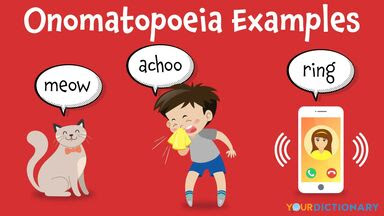
Onomatopoeia is the process of creating a word that phonetically imitates, resembles, or suggests the sound that it describes. Such a word itself is also called an onomatopoeia. Common onomatopoeias include animal noises such as oink, meow, roar, and chirp.


A few examples….


HUMAN VOCAL SOUNDS 


Achoo

Chomp

Cough

Hiccup

Hum


SOUNDS MADE BY DEVICES OR OBJECTS


Bang

Boom

Beep

Ching

Clatter

Clink

Crackle

Crash

Creak

Ding dong

Fizz

Flutter

Honk

Kaboom

Knock

Oom-pah

Ping

Plop

Pop

Rumble

Sizzle

Slosh

Snap

Splat

Splash

Squish

Swish

Tap

Thump

Tick 

Tick tock

Toot

Vroom

Whirr

Whoosh

Zap


ANIMAL AND BIRD NOISES 


Bark

Bleat

Buzz

Chirp

Chirp

Growl

Hiss

Hoot

Howl

Meow

Moo

Purr

Quack

Ribbit

Roar

Screech

Tweet

Woof


Sunday, November 07, 2021

Perspicacity


Perspicacity (also called perspicaciousness) is a penetrating discernment (from the Latin perspicācitās, meaning throughsightedness, discrimination)—a clarity of vision or intellect which provides a deep understanding and insight.

It takes the concept of wisdom deeper in the sense that it denotes a keenness of sense and intelligence applied to insight. It has been described as a deeper level of internalization.

Another definition refers to it as the "ability to recognize subtle differences between similar objects or ideas".

The above is what Wikipedia told me after I head this word in use in an audiobook today. 

It seems it is also what Rene Magritte named one of his paintings (I’ve seen it, but didn’t know the title. 


Saturday, October 23, 2021

I quit my job

I quit my job this week, but I did not give up. 

I am so excited to be starting a new job in November (yeah!) but giving notice at my current job had a few landmines for me. 

I gave my full notice, but working for the next 2 weeks seemed daunting. As much as my change was driven by a desire to return to L&D was the need to change jobs for my mental health. While it started well, and I learned a lot from becoming a call centre agent, I had never become used to relentless calls (even though that’s the job!) and my tank was empty. 

I hesitated to just “quit” as it’s not my style and it seemed disrespectful of an employer who had treated me well. Yet, while I wanted the good reference, I needed to protect my mental health more. 

Finding myself in a bit of a quandary, the next morning I chose to simply ask if there was a way I could leave right away with grace. Within minutes I had a response from my supervisor. Of course, no problem, they understood, and they would accept my resignation immediately. I was told I would be paid for the day and could log out. 

What a blessing. I am enjoying a much needed break before I start my new gig, and I got there without burning any bridges. 

Thursday, October 07, 2021

Tiny Helpers

A recently discovered FAB resource for e-learning developers:

https://tiny-helpers.dev/


Sunday, August 01, 2021

White rabbits!

"Rabbit rabbit rabbit" is a superstition found in Britain and North America wherein a person says or repeats the words "rabbit", "rabbits" and/or "white rabbits" aloud upon waking on the first day of a month, to ensure good luck for the rest of it. 🐇🐇🐇🐇🐇🐇🐇🐇

Source: courtesy of Sheryl MacKay, host of CBC Radio’s North by Northwest 

Saturday, May 15, 2021

Sunday, March 28, 2021

Grass widow

I am listening to the audiobook version of Robertson Davies’ novel Fifth Business, and he used the term ‘grass widow’. I’d never heard this expression before, so paused to look it up. 

According to Mirriam-Webster, a grass widow can mean:

- a discarded mistress

- a woman who has had an illegitimate child

- a woman whose husband is temporarily away from her

- a woman divorced or separated from her husband

It feels very archaic... and it is. The first known use was in 1699 (the illegitimate child). 

I’ve also seen more modern definitions in which the grass is a metaphor for a golf green, where one’s spouse might disappear to. 


Tuesday, March 16, 2021

Indigenous Storymap


Cool project.

Douglas College Geography Department Lab Technician Sasha Djakovic spent over 4 years mapping Indigenous territories for the Province of British Columbia and presented his work as a StoryMap.

View the story map here

Saturday, March 13, 2021

Apocrypha


It’s a good day: I learned a new word. A CBC radio interview about a new podcast, The Apocrypha Chronicles, introduced me to the word.

Apocrypha refers to something hidden or secret. It comes from Greek and is formed from the combination of apo (away) and kryptein (hide or conceal). 

The word was first applied to writings which were kept secret because they were the vehicles of esoteric knowledge considered too profound or too sacred to be disclosed to anyone other than the initiated. Today apocrypha refers to works of unknown authorship or doubtful origin.

Tuesday, March 09, 2021

Alice Koller


 An Unknown Woman by Alice Koller became best seller, but to me it was just a pivotal book that I enjoyed immensely. 

Interestingly, I ‘discovered’ it when it was sitting atop a stack of books in a bedroom in a decorating magazine. I liked the room, and became curious about occupant, so pulled out my magnifying glass and copied down the title and author. Bizarre but true. 

Her story of selling everything, getting a dog and hiking up in a cabin on the beach in Maine in the winter appealed. *

I was thinking of the book today, on International Women’s Day, and looked to see if it was on Audible, sadly not. Though I probably have a copy around here somewhere ...,

In the process,I discovered that she passed away in 2020. Alice Koller dead at 94 - New York Times

*As a side note, I also enjoyed May Sarton’s Journal of Solitude, penned in a similar setting.

Sunday, March 07, 2021

Canada Reads 5/5


I am all ready for Canada Reads 2021. It was only a week or so ago when I realized that I wanted to read all five books prior to the debates this year ... and I finished the last one last night. I listened, via Audible, and that’s what made it possible (otherwise I’m a slow reader),

Which is my favourite? It’s hard to say, as I enjoyed them all. They were all so different! I could see any one of them winning. I confess my heart lies with Johnny Appleseed. Not only is it a truly great book, at this time of Truth and Reconciliation it gave me a greater understanding of the indigenous experience in Canada, which is important to me. As the Canada Reads 2021 is a book to transport you, I am not sure it will win, if the panelists take that theme literally. If that’s the case, Butter, Honey, Pig, Bread really did that for me, as I really left Canada. I could make a case for the others too. 

Should be more fun to lister to the debates this year. 


Monday, March 01, 2021

Legend of a Mind


Tonight I am listening to an especially good concert recording, the Moody Blues at Red Rocks. Recorded in 1992, the band was accompanied by the Colorado Symphony Orchestra. I’m listening for free on Apple Music. It’s worth a listen if you haven’t heard it. 

What drew me to post was the Timothy Leary’s dead lyrics. The psychologist and 60’s LSD advocate was actually alive at the time the song was first recorded in 1968 on the In Search of the Lost Chord album. 

There’s a good backgrounder on pophistorydig.com. 

Wednesday, February 24, 2021

The Acropolis gets a lift


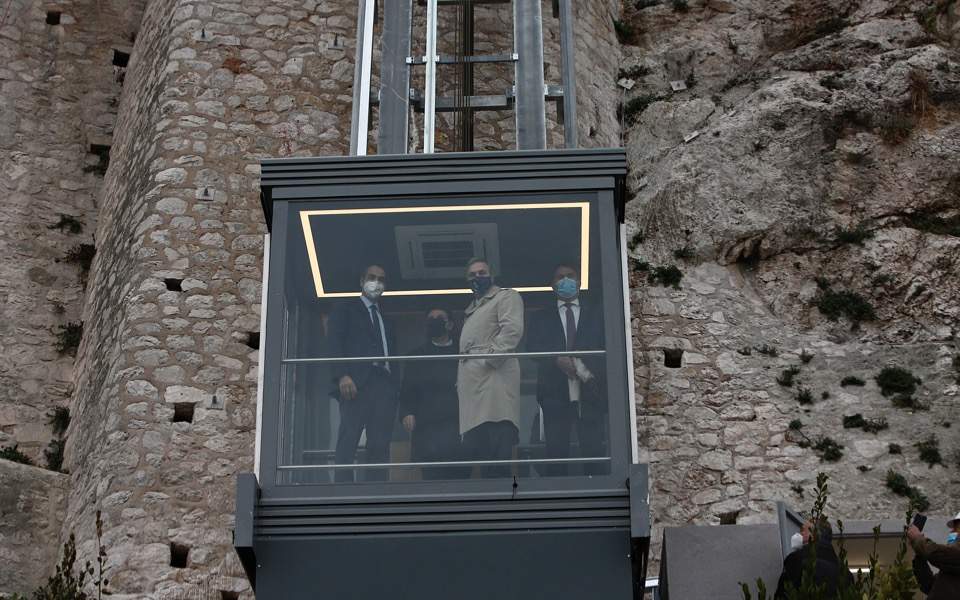
For when the world travels again, there is good news for accessible travel in Greece: the Acropolis has a new lift! 

A big step up from the rattly construction cage that my sister and I fanangled our way into back in 2009 (her walking stick came in handy for negotiations!).

This is a real glass-walled elevator. Atop the crop there are accessible pathways to allow wheelchair users to move around. I say kudos to the Greek government for making this happen, especially during COVID times. Until travellers return, I am glad that Athenians are able to enjoy more of their precious sacred site, pleasantly sans-tourists. 

Read more in Ekathimerini


Tuesday, February 16, 2021

Zoolook evocations

Zoolook album cover

There are so many people in my life that I always thought would be close friends forever, that I have lost contact with. I used to think that this meant that I was lousy at maintaining relationships, but at the moment I am seeing my life full of these moments of great connection, each so powerful in their own way, all touched me in some way. As I meditate as I am listening to Zoolook, they are coming to mind, each for awhile, before my attention turns to the next who my thoughts evoke. At this moment, I am reflecting on how these people make me understand the me I was at that time. I see them in my mind's eye as still essentially being the same people now, but older... but that's ridiculous; each could be something quite different today. Probably are. I am completely different, so why not them? It's interesting to consider that they probably think of me the same way too.

Thursday, February 11, 2021

Keith Haring meets Doc Marten


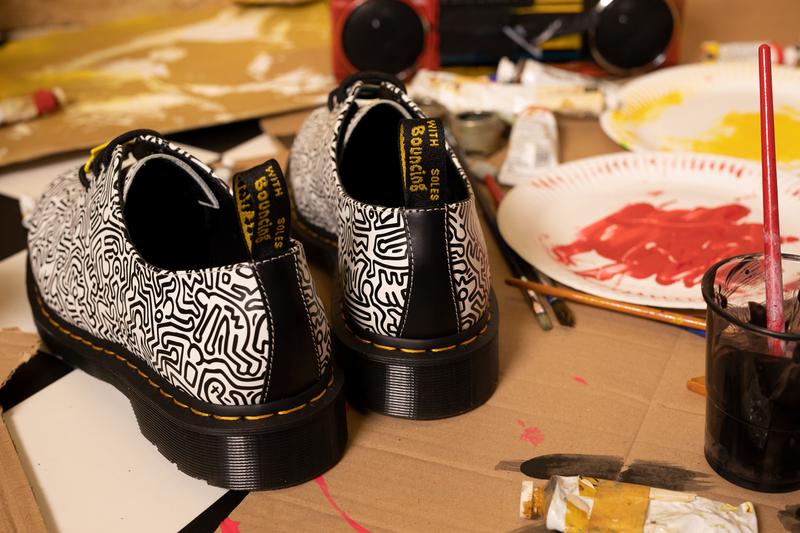
 If you love Keith Haring’s art, and like to sport Doc Martens, this is for you.

The famed footwear brand has partnered with Keith Haring’s estate to create a line of Keith Haring Doc Martens. 

Read more on Art News.


Thursday, February 04, 2021

Operation Night Watch

I was listening to a podcast not long ago and learned many interesting things about Rembrandt's Night Watch. So much has come to light about his technique, and the many instances he changed his mind and painted over spots. All this is thanks to modern day technology.


That's only half the story.

When I started to draft this post, I turned to Wikipedia.

What really caught my attention was the image size choices, as I generally select the largest size for use in my blog. Here's what I saw: 287 × 240 pixels | 573 × 480 pixels | 917 × 768 pixels | 1,222 × 1,024 pixels | 57,813 × 48,438 pixels. "Wow," I thought, then I wondered why.

Here's the story:

On May 13, 2020, the Rijksmuseum published a 44.8 gigapixel image of The Night Watch, made from 528 different still photographs (24 rows of 22 pictures stitched together digitally with the aid of neural networks). Created primarily for conservator scientists, by making it public the Rijksmuseum has opened the virtual door for anyone to see the master's brushstrokes.

Never before has such a large painting been photographed at such high resolution, and it is still a work in progress. In total the robot will take more than 8400 photos at an extremely high resolution of 5 microme-tres, or five thousandths of a millimetre.

Operation Night Watch - Rijksmuseum